Somalia is experiencing a wave of fierce public unrest and deepening political tension after Israel’s historic recognition of Somaliland as an independent state, prompting mass protests, urgent diplomatic activity and a warning from the President of Somaliland about rising hostility in the region.
Tens of thousands of Somalis have taken to the streets in cities across the country, including the capital Mogadishu, Baidoa, Dhusamareb, Las Anod and Buhoodle, in what security analysts are describing as the largest nationwide demonstrations in years. Crowds of men, women and youth flooded main roads, waving Somali flags and chanting for unity and the preservation of Somalia’s territorial integrity, angrily opposing what they view as a violation of their nation’s sovereignty.
The protests erupted shortly after Israel became the first country to formally recognise the self-declared Republic of Somaliland on December 26, 2025, in a move that has upended political calculations in the Horn of Africa and drawn strong regional and international condemnation. Somaliland, which declared independence from Somalia in 1991 following a civil conflict, had long sought diplomatic recognition but had never before secured formal endorsement from a UN member state.
The Somali government, supported by leaders in the protests, has blasted the recognition as an unlawful affront to national unity. In a recent emergency session of the United Nations Security Council, Somalia’s UN ambassador Abu Bakr Dahir Osman told world leaders that Israel’s action threatened both regional stability and the principles of international law. “This utter disdain for law and morality must be stopped now,” he said, warning that the recognition “aims to promote the fragmentation of Somalia.”
Somalia’s National Consultative Council, which brings together the President, Prime Minister and regional leaders, declared the recognition “illegal” and urged the Somali people to stand united in defence of their nation’s unity and peace. A communique released by the council said the decision disregarded Somalia’s sovereignty and imperilled security from the Red Sea to the Gulf of Aden.
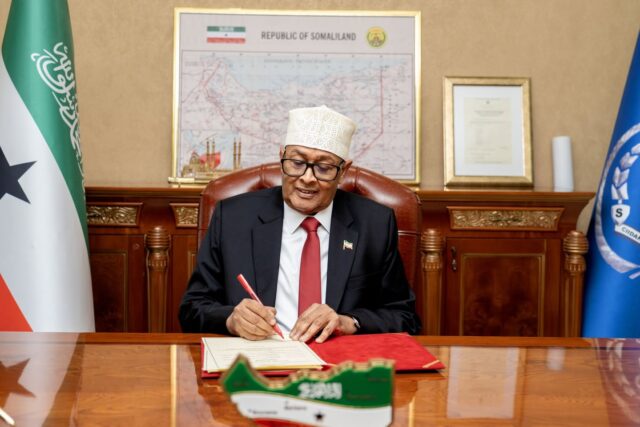
Amid the tumult in Somalia, Somaliland’s President Abdirahman Mohamed Abdullahi has warned that the territory’s newfound diplomatic recognition has also generated growing hostility both within and beyond its borders, and called for unity and heightened security as tensions mount.
In comments addressing both supporters and critics, the Somaliland leader emphasised the need for calm and resilience in the face of opposition from Mogadishu and parts of the international community. He said the move towards formal recognition was intended to bolster Somaliland’s diplomatic prospects and foster broader cooperation — not to provoke conflict. However, in a sign of how fraught the situation has become, he acknowledged that critics view the recognition as a threat, and urged his people to remain vigilant. He also highlighted Somaliland’s historical quest for statehood and its efforts to engage with the world on its own terms.
Throughout Somalia, protesters have voiced similar themes of unity and resistance. In the capital’s Mogadishu Stadium, religious leaders and civil society figures urged demonstrators to reject external interference, with many condemning the recognition as part of a broader geopolitical manoeuvre that undermines Somali sovereignty. “We stand for the unity of the Somali people wherever they are,” one rally speaker told the gathering, reflecting the strong nationalist sentiment animating the protests.
Somalia’s Foreign Minister Abdisalam Abdi Ali also weighed in, warning that Israel’s decision could have serious regional consequences, including heightened insecurity in the Horn of Africa and disruption of critical maritime corridors such as the Red Sea and the Gulf of Aden.
The diplomatic backlash has been significant. At the Security Council, several nations condemned Israel’s recognition, arguing it set a dangerous precedent that could embolden separatist movements elsewhere. A senior United Nations official reiterated that existing UN Security Council resolutions affirm Somalia’s sovereignty and territorial integrity, and urged peaceful dialogue rather than actions that might escalate tension.
Turkish President Recep Tayyip Erdogan, hosting Somali President Hassan Sheikh Mohamud in Istanbul this week, described the recognition as “unacceptable” and reiterated Turkey’s backing for a united Somalia. Mohamud decried the move as a violation of international law and said the bilateral talks would focus on rallying diplomatic support against what both leaders view as a destabilising act.
As mass protests continue and diplomatic pressure mounts, the crisis over Israel’s recognition of Somaliland has underscored deep anxieties about state sovereignty, territorial integrity and regional security. For many Somalis, the demonstrations reflect a collective outcry against what they perceive as external interference in their nation’s affairs, even as leaders in both Somalia and Somaliland seek to navigate a rapidly shifting political landscape.
The coming days are likely to see further protests, intensified diplomatic engagement and possible negotiations aimed at de-escalation — but for now, the streets of Somalia echo with calls for unity, defiance and national pride.