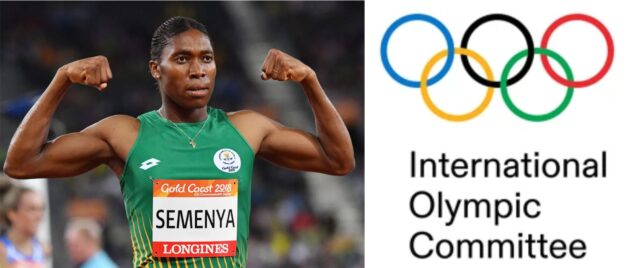
Two-time Olympic champion Caster Semenya has vowed to challenge the International Olympic Committee’s (IOC) newly introduced gender testing policy, escalating a long-running global debate over fairness, science, and human rights in elite sport.
The South African athlete, who has been at the centre of eligibility disputes for years, said she would actively resist the policy, which mandates genetic screening for female athletes competing at the Olympics. “We’re going to be vocal about it, we’re going to make noise until we’re heard,” Semenya said, insisting the measure undermines fundamental rights and dignity.
The new policy, introduced by the International Olympic Committee, requires athletes to undergo a one-time test—typically via saliva or cheek swab—to determine eligibility for women’s events based on genetic markers, including the SRY gene. The IOC says the move is designed to protect fairness in female competition, particularly in events where physical advantages linked to male puberty could be decisive.
However, Semenya has strongly criticised the framework, arguing that it places undue scrutiny on women’s bodies and identity. She described the policy as harmful and discriminatory, warning that it risks setting a dangerous precedent for future generations of athletes.
“For you as a woman, why will you be tested to prove that you fit?” she said in earlier remarks on the issue, calling the process “a disrespect for women.”
The policy has reignited divisions across the sporting world. While some stakeholders argue that biological criteria are necessary to preserve competitive integrity, critics—including athletes and human rights advocates—say the science remains contested and that such measures disproportionately affect women from the Global South.
Semenya’s stance builds on years of legal battles against regulations imposed by track and field authorities, which previously required athletes with differences in sex development (DSD) to lower natural testosterone levels to compete in certain events. She has consistently refused such medical interventions, maintaining that her natural biology should not disqualify her from competition.