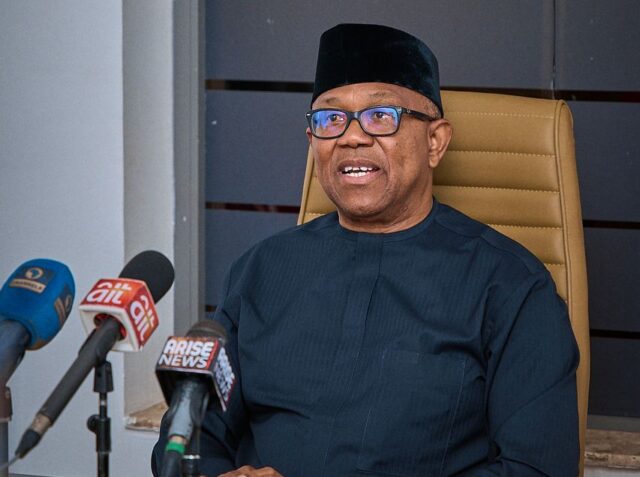
Former presidential candidate Peter Obi has opened up on the reasons behind his exit from the African Democratic Congress (ADC), blaming what he described as a “toxic” political environment and persistent systemic interference in party affairs.
In a deeply reflective message shared on Sunday, Obi said his decision to leave the party was not driven by personal grievances against its leadership but by broader structural issues undermining internal cohesion and democratic ideals. “My decision to leave the ADC is not because our highly respected Chairman, Senator David Mark, treated me badly, nor because my leader and elder brother, Alhaji Atiku Abubakar, or any other respected leaders did anything personally wrong to me,” he stated.
Instead, Obi pointed to what he described as recurring patterns of political destabilisation, alleging that external forces had begun to infiltrate party structures. According to him, “the same Nigerian state and its agents that created unnecessary crises and hostility within the Labour Party that forced me to leave now appear to be finding their way into the ADC, with endless court cases, internal battles, suspicion, and division.”
The former Anambra State governor lamented the broader climate of Nigerian politics, describing it as increasingly hostile to sincerity and reform-minded leadership. He said the environment is marked by “intimidation, insecurity, endless scrutiny, and discouragement,” adding that even allies sometimes become sources of pressure. “Some who publicly identify with you privately distance themselves or join in unfair criticism,” he noted.
Obi also used the statement to reflect on his personal philosophy of leadership, emphasising service over ambition. “I have never used privilege, position, or resources to oppress others, intimidate the weak, or make people feel small. To me, leadership has always been about service, sacrifice, and helping others rise,” he said.
Despite stepping away from the ADC, Obi maintained that his political decisions are not driven by personal ambition for office but by a desire for systemic change. “Let me assure all that I am not desperate to be President, Vice President, or Senate President. I am desperate to see a society that can console a mother whose child has been kidnapped or killed,” he said, highlighting insecurity and poverty as key concerns.
He further questioned societal values, arguing that integrity and humility are often misinterpreted in Nigeria’s political space. “Why is doing the right thing often misconstrued as wrongdoing in our country? Why is integrity not valued?” he asked.