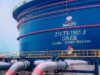
The Managing Director and Chief Executive Officer of the Dangote Petroleum Refinery, David Bird, has assured Nigerians that the refinery will continue to meet the country’s fuel demand despite ongoing disruptions in the global oil market and rising supply costs.
Speaking during a media briefing, Bird said domestic refining capacity has become critical for Nigeria’s energy security, noting that the refinery’s operations are helping to shield the country from the worst effects of volatility in international petroleum markets.
According to him, local refining provides a buffer that helps prevent fuel shortages and long queues at filling stations even when global supply chains face disruptions. “Domestic refining gives Nigeria supply security, ensuring the country avoids fuel shortages and queues even when global markets are disrupted,” he said.
Bird explained that despite Nigeria’s crude-for-naira arrangement, the refinery does not receive crude oil at discounted rates. Instead, he said the facility purchases Nigerian crude at prevailing international benchmark prices, meaning it remains fully exposed to fluctuations in global commodity markets.
“Even under the crude-for-naira arrangement, Nigerian crude is purchased at international benchmark prices,” Bird said, emphasizing that the refinery operates under the same pricing realities that affect refineries around the world.
The refinery chief noted that global oil markets are currently experiencing extreme volatility, with crude prices rising sharply from the mid-$60 range to nearly $120 per barrel within a week. The surge has been driven by escalating geopolitical tensions and concerns about disruptions to global energy supply routes.
He added that the refinery’s operations are affected not only by crude oil prices but also by rising freight, insurance and financing costs associated with transporting crude and refined products.
“The refinery is fully exposed to international commodity markets, including crude oil prices, freight rates, insurance and financing costs,” Bird said.
One of the most dramatic cost increases has been in maritime freight, which he said has surged significantly as tanker availability tightened amid heightened global demand for energy shipments. According to Bird, the cost of transporting crude by tanker has jumped from about $800,000 per shipment to roughly $3.5 million under current market conditions.
Despite these challenges, Bird said the refinery continues to operate at its full nameplate capacity of approximately 650,000 barrels per day, with the potential to increase production to around 700,000 barrels per day as operational efficiencies improve.
The refinery, one of the largest single-train facilities in the world, is expected to play a major role in reducing Nigeria’s dependence on imported petroleum products while strengthening domestic energy security during periods of global market instability.