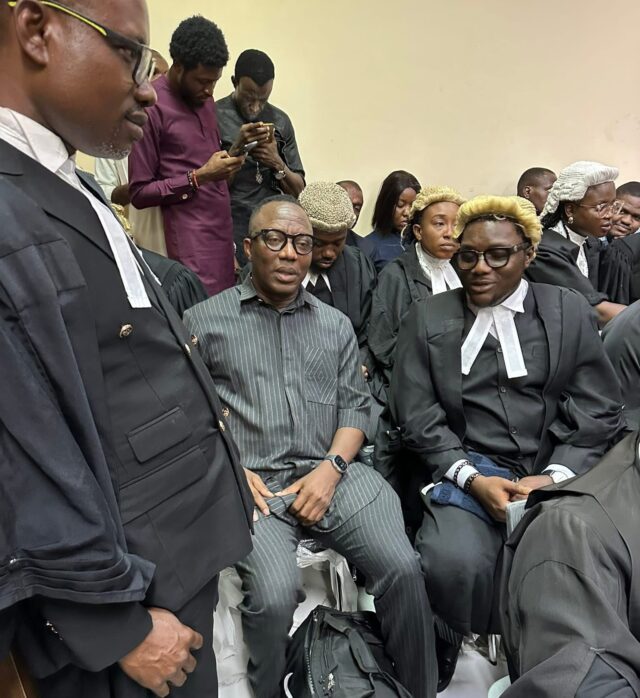
The Department of State Services (DSS) has defended its role in the ongoing prosecution of human rights activist and African Action Congress (AAC) leader, Omoyele Sowore, insisting that the circumstances leading to his remand at the Kuje Correctional Centre were strictly the result of court proceedings and not actions taken by the agency.
In a statement issued on Tuesday, the DSS said it had taken note of public concerns surrounding events at the Federal High Court in Abuja on June 22, 2026, which culminated in Sowore’s remand. The Service also disclosed that its Director-General had ordered an immediate investigation into allegations involving DSS operatives during an incident that occurred after the court session.
The agency expressed concern over scenes showing what it described as Sowore’s altercation with a correctional official and a “seeming scuffle” involving DSS operatives. According to the DSS, “Although at the end of the saga, he curiously opted for a DSS vehicle instead of that of the Correctional Service, the Director General has ordered an immediate investigation into the alleged conduct of Service operatives involved in the incident.”
Providing its account of the case, the DSS said the legal dispute originated from a social media post made by Sowore on August 25, 2025, in which he referred to President Bola Tinubu as a “criminal” while reacting to remarks the President reportedly made during a visit to Brazil.
According to the Service, Sowore had written: “this criminal actually went to Brazil to state that there is NO MORE CORRUPTION in Nigeria. What audacity to lie shamelessly.”
Rather than immediately arresting the activist, the DSS said it first sought a non-coercive resolution. “The Service, in a letter dated 4th September, 2025 demanded a retraction within one week. This is in line with the practice of the current DG-DSS to resolve such issues without use of force, failure to which it may resort to judicial interpretation,” the statement said.
The agency cited several previous cases to support its claim of adherence to legal processes, including its court action against the proposed shadow government initiative led by Professor Pat Utomi, as well as disputes involving media organisations over reports concerning alleged DSS operations at the Lagos State House of Assembly and the National Assembly Complex.
The DSS further noted that it eventually filed charges against Sowore under Section 24 of the Cybercrimes (Prohibition, Prevention, etc.) Amendment Act, 2024, in suit number FHC/ABJ/CR/481/2025, seeking what it described as a judicial interpretation of whether his comments amounted to cyberbullying and unlawful disparagement of the President.
The Service stressed that it did not oppose Sowore’s release when he was initially granted bail on self-recognition by the court. “The public may wish to note that, Sowore was granted bail on self-recognition even without a surety at the commencement of the trial, a position the Service did not oppose and even Sowore applauded the development,” it stated.
The DSS maintained that the activist’s bail revocation and subsequent detention were consequences of judicial decisions rather than any action by the agency. “From the foregoing, it is clear the issues that led to his bail revocation and subsequent remand were entirely premised on the court processes, as the Service neither arrested nor opposed his bail,” the statement added.