President Bola Ahmed Tinubu has announced plans to deploy an artificial intelligence-powered network of over 5,000 digital surveillance cameras across Plateau State, as part of urgent measures to combat rising insecurity following recent deadly attacks in Jos.
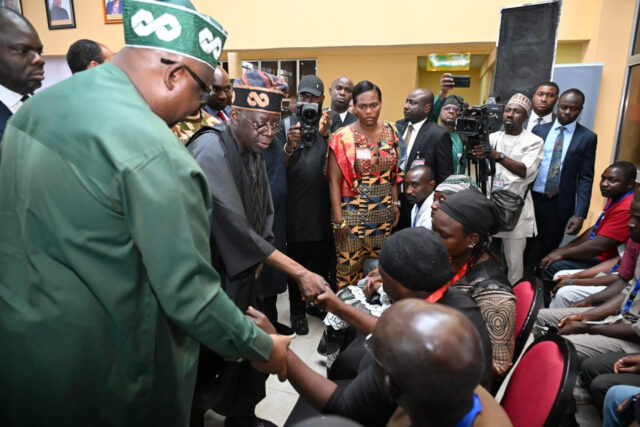
The President made the disclosure during a visit to the state capital, where he commiserated with victims of the March 29 violence in Angwan Rukuba, Jos North Local Government Area, which claimed several lives. Addressing affected families and stakeholders, Tinubu assured residents that the Federal Government would take decisive steps to prevent a recurrence.
“I promise you that this experience will not repeat itself,” the President said, while expressing deep sorrow over the incident. “No amount of money can recompense for lost souls.”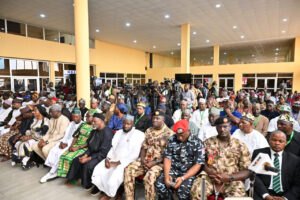
Tinubu directed key security chiefs, including the Minister of Defence, Christopher Musa, the Chief of Army Staff, Waidi Shaibu, and the Inspector-General of Police, Olatunji Disu, to intensify efforts to apprehend those responsible for the killings. He charged them to “unearth and find the killers” and ensure justice is served.
As part of a broader technological response, the President said the Minister of Communications and Digital Economy, Bosun Tijjani, would oversee the immediate rollout of the surveillance system in collaboration with state authorities and security agencies. The project will commence in Jos before expanding statewide, building on similar deployments in Lagos and Enugu.
In addition, Tinubu directed the Minister of Humanitarian Affairs, Bernard Doro, to compile comprehensive data on victims to ensure equitable distribution of government support to affected families.
Speaking during the engagement, Plateau State Governor Caleb Mutfwang described the attack as a setback after a period of relative calm, expressing confidence in ongoing security efforts. “We will win this war against insecurity,” he said, while thanking the President for approving the recruitment of 1,000 forest guards to strengthen local security architecture.
Political and traditional leaders at the meeting called for deeper collaboration and long-term solutions to the recurring violence. Former governor Jonah David Jang warned that the spread of violence from rural communities into urban centres signals a dangerous escalation. “The fact that the violence is now leaving the villages and getting into the townships is a dimension that we do not want to see,” he said, while advocating a high-level dialogue in Abuja.
Another former governor, Simon Lalong, stressed that lasting peace would require internal consensus among Plateau stakeholders. “It is not security agencies that will bring peace — Plateau people will bring peace,” he said, urging a closed-door meeting to address underlying issues.
Former Deputy Speaker of the House of Representatives, Ahmed Idris Wase, highlighted the scale of recent losses, noting that over 14 people, including a military officer, were killed in fresh incidents in parts of the state. He called for enhanced coordination between air and ground forces to prevent further attacks, especially as the farming season approaches.
Also speaking, the National Chairman of the All Progressives Congress, Nentawe Yilwatda, expressed optimism that the President’s intervention would strengthen security operations and provide relief to grieving families.
Tinubu, however, emphasised that beyond reactive measures, leaders must learn from past crises to prevent future bloodshed. “Why is the past not a source of lessons to us?” he asked, reaffirming his commitment to peace, security, and inclusive governance.