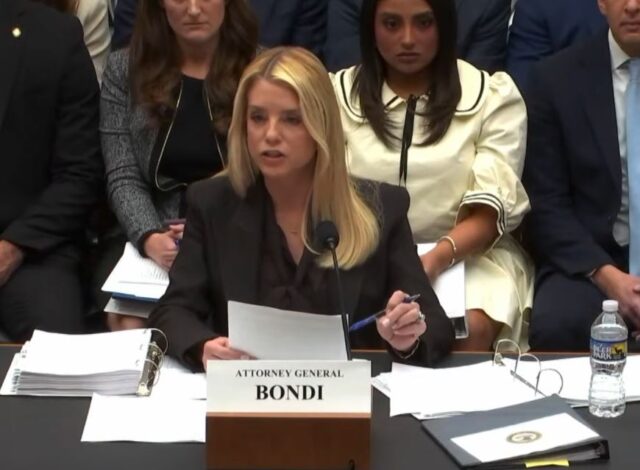
U.S. Attorney General Pam Bondi, a staunch ally of President Donald Trump, was sharply questioned by members of Congress on Wednesday over the handling of sensitive documents related to the Jeffrey Epstein case, in a hearing that devolved into a heated exchange between lawmakers and the embattled official. Survivors of Epstein’s abuse and their supporters packed the hearing room, pressing for transparency and accountability as frustrations with the Department of Justice’s redaction decisions boiled over.
Bondi, who served as Florida’s attorney general before joining Trump’s inner circle, has faced criticism for her role in overseeing or defending decisions tied to the release of more than three million pages of documents connected to Epstein’s network and trafficking operations. The uproar centers on what critics describe as improper redactions that obscured names of key figures and, conversely, left victims’ identities exposed.
In the tense exchange, Bondi defended the administration’s efforts, pointing to the sheer volume of documents released and placing responsibility on the law signed by Trump. “This Administration released over 3M pages of documents…Trump signed that law to release all of those documents,” Bondi said, accusing Democrats of selective outrage by noting that her critics had not pressed former Attorney General Merrick Garland on the same subject during his tenure.
The response drew swift rebukes from members of the House Judiciary Committee, particularly Representative Jamie Raskin, who directly challenged Bondi’s characterization of the Department’s conduct. “You redacted the names of abusers, enablers, accomplices, and co-conspirators, to spare them embarrassment and disgrace, which is the exact opposite of what the law ordered you to do,” Raskin said, asserting that the redactions undermined the purpose of the statutory release. He went further to criticise Bondi for the department’s failure to shield victims’ identities as required, saying: “Even worse, you shockingly failed to redact many of the victims’ names, which is what you were ordered to do by Congress.”
The confrontation underscored deep partisan divisions over the handling of justice in the Epstein case and broader concerns about government transparency. Survivors and advocates watching the hearing reacted emotionally to the back-and-forth, with several interrupting to demand more direct answers and clearer commitments to victim privacy and accountability for powerful figures allegedly implicated in Epstein’s circle.
Bondi’s tenure has been closely associated with her loyalty to Trump, and her defenders in the Republican majority reiterated her attempts to follow the law as enacted. However, critics on both sides of the aisle expressed dissatisfaction with the disclosures, with some lawmakers suggesting further investigation or legal remedies to address perceived lapses in compliance.
As the hearing concluded, lawmakers signaled that the matter is far from resolved, with potential for additional oversight actions or legislative tweaks to ensure that future releases of sensitive materials protect victims while holding accountable those involved in wrongdoing. The emotional testimony from survivors and the contentious exchanges between Bondi and lawmakers are likely to prolong public and political scrutiny over how the U.S. government manages transparency in high-stakes criminal cases.