The Lagos State Government has pledged to enforce tougher regulatory measures to curb the rising incidents of fire outbreaks and building collapses across the state, following the deadly fire and partial collapse of the 22-storey Great Nigeria House in Lagos.
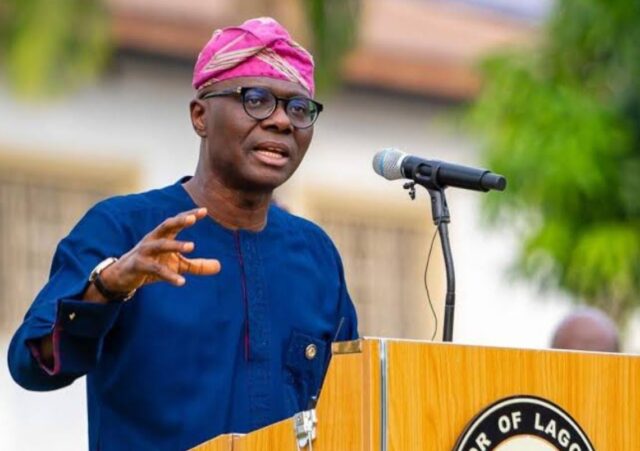
Governor Babajide Olusola Sanwo-Olu made the commitment while inspecting the site of the incident, which occurred about ten days ago and has so far claimed eight lives. The high-rise building was engulfed by fire before parts of it collapsed, triggering an extensive search-and-rescue operation that is still ongoing.
Addressing journalists at the site, Sanwo-Olu said the tragedy underscored the urgent need for stricter enforcement of building standards and safety regulations. He warned that the state government would take “tough but necessary decisions” to prevent avoidable disasters that continue to endanger lives and property.
“We will not shy away from making hard decisions where lives are at stake,” the governor said. “The continuous occurrence of fire incidents and building collapses is unacceptable, and we must confront the root causes decisively.”
Sanwo-Olu explained that excavation and debris-clearing efforts had been delayed because engineers could not guarantee the structural integrity of the remaining portion of the building. According to him, the section still standing poses a serious risk to rescue workers and nearby properties.
“The integrity of the part of the building that is still standing cannot be guaranteed,” he said. “That is why we have had to proceed with extreme caution before commencing full excavation.”
The governor directed the Lagos State Building Control Agency to immediately intensify enforcement actions against developers and property owners who erect substandard structures or flout approved building plans. He said such negligence was largely responsible for recurring collapses and fire disasters in the state.
“I have instructed the Lagos State Building Control Agency to clamp down, without delay, on substandard buildings and sharp practices that put lives in danger,” Sanwo-Olu stated. “We must send a clear message that safety regulations are not optional.”
While commiserating with families of the victims, the governor expressed the state government’s sympathy and assured them that every effort was being made to recover those still trapped and to determine the cause of the incident.
“Our hearts go out to the families who have lost loved ones in this tragic incident,” he said. “The state stands with you at this difficult time.”
Sanwo-Olu also called for the support of federal agencies and multinational companies with specialised technical expertise to safely bring down the damaged structure, allowing excavation to proceed without further risk.
“We are seeking the cooperation of relevant federal agencies and international partners who have the technical capacity to safely dismantle the remaining structure so that excavation can commence immediately,” he added.
Emergency responders confirmed that eight bodies have so far been recovered from the site, while investigations into the cause of the fire and collapse continue.
The incident has once again raised concerns about building safety, regulatory enforcement and emergency preparedness in Nigeria’s commercial capital, with the state government insisting that stricter oversight is now unavoidable to prevent future tragedies.