In a landmark development with far-reaching geopolitical implications, Israel has officially recognised the Republic of Somaliland as an independent and sovereign state, ending the breakaway region’s three-decade quest for international legitimacy.
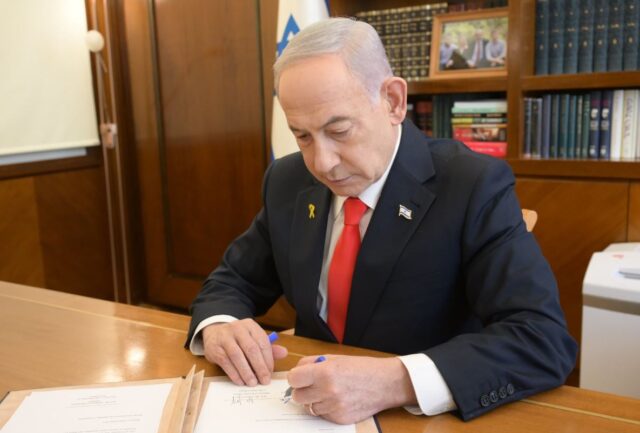
Israeli Prime Minister Benjamin Netanyahu, Foreign Minister Gideon Sa’ar, and Somaliland President Abdirahman Mohamed Abdullahi signed a joint declaration of mutual recognition on Friday, formalising the historic decision.
“It is with great pride that we announce today the official recognition of the Republic of Somaliland as an independent and sovereign state,” Prime Minister Netanyahu said in a statement released by his office. The declaration, which was signed virtually by the three leaders, marks the first time a United Nations member state has recognised Somaliland since it declared independence from Somalia in 1991.
Netanyahu described the move as “seminal and historic,” reflecting deepening ties between the two nations. He congratulated President Abdullahi for his leadership and commitment to stability, peace, and prosperity in the Horn of Africa and extended an official invitation for him to visit Israel. “We intend to work together on economic development, agriculture, health, technology, and strengthening bilateral cooperation,” the Israeli leader said.
President Abdirahman Mohamed Abdullahi welcomed the recognition, calling it a “historic moment” for Somaliland and a vindication of its decades-long pursuit of statehood. Abdullahi expressed gratitude to Netanyahu and Sa’ar for their decision, underscoring that the recognition would help advance not only diplomatic standing but also economic growth and regional stability. He said the move would deepen cooperation between the two nations, particularly in sectors critical to development.
Foreign Minister Gideon Sa’ar highlighted that the agreement follows a year of sustained dialogue between Israel and Somaliland. He said relations would extend beyond formal recognition to include the establishment of embassies and the appointment of ambassadors, further institutionalising ties between the countries. Sa’ar said the partnership aims to promote bilateral relations, foster regional stability, and create broad economic opportunities.
The declaration was framed by Israeli officials as part of diplomatic progress inspired by the Abraham Accords, the U.S.-brokered normalization agreements that began in 2020 under President Donald Trump. According to Israeli sources, the recognition aligns with initiatives to expand Israel’s diplomatic footprint and strategic partnerships across Africa and the broader Middle East.
Since its unilateral declaration of independence in 1991, Somaliland has operated as a de facto independent republic, maintaining its own government, security forces, currency, and democratic institutions. Despite this, it has struggled to achieve formal recognition, largely due to Somalia’s insistence that it remains part of its sovereign territory and broader international reluctance to set precedents for secessionist regions.
The move has already elicited regional and international responses. Somalia, Egypt, Turkey, and Djibouti have condemned Israel’s decision, warning that recognising breakaway regions undermines territorial integrity and could destabilise regional peace. Their statements reaffirmed support for Somalia’s sovereignty and signalled diplomatic pushback against unilateral recognition of Somaliland.
Despite opposition from some quarters, the Somaliland government views Israel’s recognition as a turning point in its diplomatic strategy. For years, Somaliland leaders—including President Abdullahi—have actively campaigned for global recognition, positioning the territory as a stable, democratic partner in a volatile region. In May 2025, Abdullahi reiterated his determination to secure recognition from the international community, describing it as a central goal of his presidency.
The agreements signed on Friday envisage future cooperation in key areas such as trade, technology, agriculture, and health, potentially transforming Somaliland’s economic landscape and contributing to its prospects for broader diplomatic acceptance.