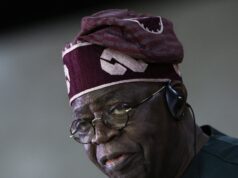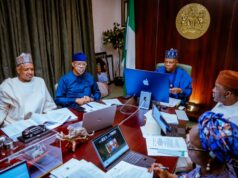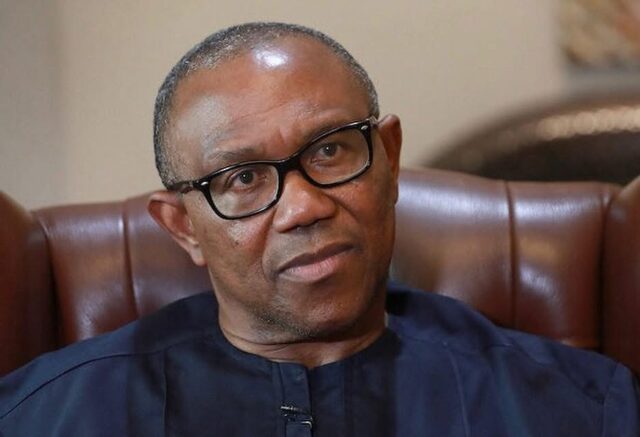
The Presidency has launched a scathing rebuttal to recent calls by Labour Party’s 2023 presidential candidate, Peter Obi, for President Bola Ahmed Tinubu to resign over what Obi described as failures in governance, insecurity and economic management.
In a lengthy statement issued on Monday, Presidential Special Adviser on Information and Strategy, Bayo Onanuga, dismissed Obi’s demand as “childish and hollow,” arguing that the comparison between Nigeria’s political system and the recent resignation of British Prime Minister Keir Starmer was fundamentally flawed.
According to Onanuga, Obi’s position reflected “a selective and distorted view of Nigeria’s realities since 2023,” insisting that Nigeria’s presidential system differs significantly from Britain’s parliamentary model. He stated that President Tinubu was elected for a fixed four-year term and should ultimately be judged by Nigerians at the ballot box.
“Obi should wait until the presidential election to know what the people think of Tinubu’s government. Moving to use X to harangue the President out of office is off the mark and anti-democratic,” Onanuga said.
The presidential aide further pointed to recent electoral victories recorded by the ruling All Progressives Congress (APC), including outcomes in Ekiti State and several senatorial contests, as evidence that President Tinubu and his party continue to enjoy substantial public support.
Responding to Obi’s criticism of the administration’s handling of insecurity, Onanuga argued that the current security challenges predate Tinubu’s presidency and that the government has recorded measurable successes in combating terrorism, banditry and kidnapping. He claimed that thousands of terrorists had been neutralised while hundreds of kidnapped victims had been rescued through intensified military operations across different parts of the country.
“It is laughable that Obi, who, as governor, was a colossal failure, unable to secure lives and property in his small state of Anambra, as documented by his successor, Willie Obiano, is now the one calling for President Tinubu’s resignation over security breaches in some parts of the country,” he stated.
On the economy, Onanuga rejected Obi’s assertion that Nigeria was in its “worst possible condition,” maintaining that key economic indicators show improvement since Tinubu assumed office in May 2023. He highlighted consistent GDP growth, rising foreign reserves, increased oil production, stronger government revenues and record performances on the Nigerian stock market as evidence that the administration’s reforms were yielding results.
“President Tinubu inherited what another successor of Peter Obi described as ‘a dead horse economy’. When he came on board in May 2023, President Tinubu introduced bold, courageous policies that his predecessors had shied away from,” Onanuga said.
He added that reforms in the oil and gas sector, increased investor confidence and infrastructure development projects such as the Lagos-Calabar Coastal Highway and the Sokoto-Badagry Superhighway were laying the foundation for long-term economic growth.
The Presidency also defended Tinubu’s record in the education sector, pointing to the student loan scheme and the absence of prolonged strikes by university unions during the administration’s first three years in office.
Addressing claims that Tinubu had failed to fulfil campaign promises on electricity supply, Onanuga accused Obi and his supporters of misrepresenting the President’s remarks during the 2023 campaign. He argued that Tinubu’s administration had already taken significant steps to reform the power sector through the implementation of the Electricity Act, expansion of prepaid metering and investments in off-grid energy solutions.
“The first policy President Tinubu implemented upon taking office was to sign the Electricity Act, which enables states to generate, transmit, and distribute electricity independently of the centralised grid system,” he said.
While acknowledging that Nigerians continue to grapple with high living costs, Onanuga attributed some of the economic pressures to global developments, including geopolitical tensions in the Middle East and disruptions to international supply chains.
He insisted that Tinubu remained focused on implementing solutions rather than engaging in political rhetoric, arguing that the administration was making progress in stabilising the economy and improving governance.
“Leadership is about determination to confront the challenges facing our country and the economy. President Tinubu focuses on solutions, not rhetoric—investing in reforms, stabilising the economy, improving security, and laying the groundwork for a more prosperous Nigeria,” Onanuga stated.